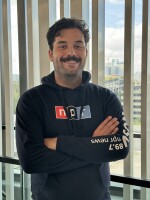
Democrat Don Leonard is challenging Republican Congressman Mike Carey this November in Ohio's 15th Congressional District.
Some election forecasters, such as the Cook Political Report, have the usually Republican-leaning district on its radar as "Likely Republican" in a midterm election where the Democratic Party expects to make large gains. Leonard, a former Ohio State University professor and west Columbus resident, believes he can unseat Carey, a German Village resident and former coal lobbyist.
WOSU has reached out to Carey several times for an interview, but have not received a response.
WOSU's George Shillcock spoke with Leonard about the race and whether he can buck the odds.
This interview has been edited for length and clarity.
George Shillcock: Don, thanks for joining us. During the campaign, I've noticed that you're framing yourself as a "do-something Democrat." I wanted to ask you, why that label?
Don Leonard: Yeah, we've got big problems right now, and we need big politics to solve those problems. What we see in America right now is an economy that no longer works for the people that create wealth. It works for people who sit at home refreshing the stock portfolios on their trust funds. What we need to do is create a politics where we actually create solutions that are as large as the problems that are facing my constituents here in central Ohio. And that means we got to get there and get stuff done.
George Shillcock: How are voters reacting when you tell them that you're a "do-something Democrat"? Is that something that they're pretty open to? I'm sure some Democrats feel a certain way about it. But what about other voters like Independents, maybe some Republicans who may even consider you?
Don Leonard: Yeah, I think we're in a moment as a country right now where folks realize that both parties have establishment practices that aren't serving the common person. So, they are looking for outside solutions. When you go back to 2016 and the fight inside the Democratic Party between Bernie Sanders and the "establishment pick," (and) Donald Trump staging a hostile takeover of the Republican Party. People are really frustrated with business as usual. What I think our opportunity is in the final days of MAGA is to show the American people that they're right to be angry, they're right to be frustrated, they're right to be looking for different alternatives, but let's ground those alternatives in things that we know to work. The kind of things that got us out of the Great Depression and saved the farmers in the Dust Bowl and helped the GIs when they came back from World War II buy homes and start families. Those are the kind of things that we know how to do. We just gotta learn from our parents and grandparents and then refresh those ideas for the 21st Century.
George Shillcock: Going to what you kind of talked about, I think people can see that both political parties are kind of having an imaging problem right now. Neither is really popular, but especially the Democrats in Congress are having a popularity problem. The label "do-something-Democrat" kind of implies the existence of "do-nothing-Democrats." I wanted to ask if you can kind of give a couple of examples? Who are people that don't really have this attitude that you're bringing to this campaign?
Don Leonard: You know, it's an astute observation. I was really inspired by Gov. [J.B.] Pritzker up in Illinois when he gave his speech in New Hampshire back in the spring of last year where he just lambasted "do-nothing Democrats." What I like to think is that we should put the focus on where we wanna go. So I'm less interested in pointing fingers at individuals and attacking the structure that undergirds why the Democratic Party... it's not just an image problem. It's a reputation problem. We do not have the reputation of getting things done in Washington. What we need to do is pass a 28th amendment in the year 2028 to get the corporate money and the foreign lobby money out of our politics. It's not the people going to Washington corrupt, it's the corrupting influence of money in our politics that's breaking our democracy. So unless we fix the underlying structure, it's absolutely impossible to escape from the place we're at.
George Shillcock: I did want to follow up real quick and check. There is some talk that there needs to be leadership change if the Democrats do take power in the Senate, in the House. Are you looking at that too? Like in the U.S. House, would you support U.S. House Minority Leader Hakeem Jeffries taking the speaker's gavel or would you want to see a kind of different approach?
Don Leonard: What I believe is that the Democratic Party has got to fundamentally reinvent itself for the 21st Century. And if Speaker Jeffries is unable to do that, he will not have my vote.
Don Leonard on money in politics
George Shillcock: So get into the idea of money in politics that you just talked about. Obviously this traces back to Citizens United, the U.S. Supreme Court case. I wanted to ask you about this stance that you're taking. I believe you don't want corporate political action committee money, right, you're not taking corporate PAC (money). That's correct?
Don Leonard: Zero dollars (from) corporate PAC.
George Shillcock: Why take this stance? I've seen a lot of Democrats taking this stance. Why do you think this is a growing trend right now?
Don Leonard: I think it's a growing trend because the American people realize that you cannot serve two masters. And when you have the ability of corporations to give exorbitant amounts of money on what they call the "hard side" of the campaign, directly into the candidates' coffers, as well as into the "soft side" of the campaign, taking positions in these super PAC attack ads for or against you, what it does is it creates channels of dependency (on) corporations and billionaires. Unholy access to the politicians that are there not to serve corporations and billionaires, but to serve the people back home in their districts. So, it's simply an observation and it's fundamentally an experiment that we're running. Can a candidate that takes no money from corporations; can a candidate who takes no money from the Israeli or any other foreign lobby; can that candidate like that win in a seat like this here in central Ohio? That's the experiment we're running. We won our primary in a hotly-contested race with that (kind of) people power underpinning it. We're gonna take that to Nov. 3 and find out if we can scale this thing and show the nation what the people power can do if you take bold, credible stands against the corrupting influence of corporate PAC money.
George Shillcock: Another thing that's being floated in Congress, I believe there may have been a small bill passed regarding stock trading, right? Do you believe that congressmembers should be able to own stock? Or should that be restricted in some way? Or is that okay?
Don Leonard: Look, since my wife and I got to Ohio 10 years ago, we put all of our retirement savings in a S&P 500 index fund, and we just let it ride. I think a diversified portfolio of stock that you come into Congress with probably makes sense. What we can't have is day trading or moving your portfolio around based on information you have. About how government action is going to adversely or positively impact one community or another. So I am a staunch opponent to congressional stock trading and I believe that anyone who's willing to take time away from their jobs to go serve the public has a responsibility to eliminate any potential for conflicts of interest.
George Shillcock: You touched on this a minute ago, but ideological PACs. AIPAC is an example of one, the American Israeli Public Affairs Committee. How do you explain to voters the difference between those? One's coming from a business, one's coming a foreign lobby or even an ideological lobby. What's sort of the line you draw especially for that? Is it just foreign lobbying groups?
Don Leonard: I think it's about making sure we're representing the interests of our constituents. So I am a proud endorsee of the Planned Parenthood Action Fund, which is their political arm and their PAC. I stand for women's reproductive rights and I am happy to take money from an organization that collects donations from individuals to help them provide a future for people like my daughter that will give them the bodily autonomy that they so deserve under this nation of freedom.

George Shillcock: You're running against Congressman Mike Carey, who made his career and his money as a coal lobbyist. Obviously, the energy sector is probably a big donor throughout politics. Democrats get some, Republicans get some. Does that influence your take on this issue?
Don Leonard: I think it's a perfect example of what's so broken with our politics. There's nothing unique about Mike Carey. Mike Carey is a symptom of a deeper disease that is the unfettered corruption of our democracy by corporate interests working their way into the voting booth on Election Day. You can't be a registered lobbyist for 20 years, go to Congress, and remain the number one recipient of coal money, despite the fact that there's no coal mines in my district. There are no coal power plants in my district, and yet somehow Mike Carey is magically the number one recipient of coal industry money. If that doesn't tell you everything you need to know about who Mike Carey is and who he's fighting for, I don't know what does.
Don Leonard on data centers and education
George Shillcock: I wanted to touch on your background a little bit. You're a former OSU professor.
Don Leonard: That's right.
George Shillcock: Education right now, that may not be the top of people's minds, but the Trump administration has sought to dismantle the U.S. Department of Education, and I believe they're actively doing so, moving things like student loans to other places, and just generally less of a focus on the federal level for education. If you get to Congress, President Trump will still be the president at that time. What do you think Congress can do under a Republican president to try and change this trajectory that they've been taking?
Don Leonard: You know, earlier you were asking me about what it means to be a "do-something Democrat." I think another feature of that is that sometimes you fight the fights that you can win, but I think sometimes you just have to fight the fights that are worth fighting. And I think that's also what it means to be a "do-something Democrat." If Donald Trump wants to continue cutting after-school programs that protect our youth and keep them out of trouble as they're going into those critical, you know, hormonal years, how dare he, and make him veto my legislation, when we vote to restore funding to our K-12 institutions, when we go to restore funding for school districts accommodating kids with special needs that are right now laying off staff and struggling so hard to keep the little ones taken care of. How dare he be thinking about... I just learned yesterday, they're trying to pull student loans from folks who are going to college to do social work. Is cruelty really the point? Is that what they're try to do? To strip our society of the best and the brightest of us who are willing to make the least amount of money to try to help one another. I mean, if there's not an opportunity for us to stand up and say no more, I can't think what that would be in the moment we're in right now.
George Shillcock: One issue kind of roiling Ohio politics, but also national politics right now, is artificial intelligence and data centers. I wanted to ask you if you can explain any proposals you have regarding AI and data centers? Do you think there should be more of them? Do you think we should kind of rein this in and add some regulations?
Don Leonard: Look, I'm a huge fan of technology. I sometimes joke, if you were to come over to my house and look at how much electronics I own, you could probably open a Best Buy. I'm just a huge of fan of gadgetry. That being said, I am not against all data centers, but I am against dumb data centers. And what has happened in Ohio over the last 10 years is the force feeding of our region with these data centers that do nothing for our local tax base. They do nothing for our local employment, in terms of the creation of jobs. These things run on skeleton crews, and they take up our valuable farmland, they encroach themselves up against our residential communities, and they jack up our electricity prices, threaten to contaminate our water systems. It's just a lose, lose, lose, lose situation when these people of central Ohio are being asked to become a dumping ground for our nation's addiction to AI.
George Shillcock: I think some labor unions, especially, have spoken up and pushed back on anti-data center stances. They're okay with regulations and adding safeguards and making sure pollutants aren't bad and stuff like that, but they would push back and say "Hey, these are good for us. These do create temporary construction jobs that could lead to even more jobs for people in the trades." What would be your message to people like them?
Don Leonard: Look, I have so much empathy for those folks who are paying their mortgages and feeding their families with good paying union construction jobs. And that's why I am not against all data centers. What I am against and what I caution them against is allowing us to go through this boom and bust phase. You know, it's so rife in American history where there's some new technology, there's new opportunity. Folks come rushing into town, they go to exploit it. They exploit the local population and then they walk away and in five, 10 years, this stuff is obsolete. What I would rather have is these data centers being built as gubernatorial candidate Amy Acton has proposed on existing brownfield sites, former industrial sites that aren't taking up our valuable farmland, they're not encroaching against our residential communities and they're creating real opportunities in places that could surely use them. At the end of the day, what we need is a bill of rights as a nation for these data centers. That means specifying how far they have to be from our communities. That means making sure that they're not jacking up our electricity prices or putting us in a downward spiral of carbon emissions and climate crisis with the amount of power that they consume. And most of all, making sure that they actually give communities the opportunity to decide for themselves. Whether or not this is the right opportunity for them.
Leonard criticizes Trump administration's immigration actions and the Iran War
George Shillcock: One major issue that has happened since President Trump took his second term is immigration. We've seen a large crackdown on this and the administration revoked Temporary Protected Status (TPS) for Haitian immigrants. Elsewhere in the country, we saw ICE agents kill people, as well as arrest immigrants in the U.S. and here in Ohio. What has been your reaction as you've seen this immigration enforcement? And what do you think Congress can do to kind of curtail this?
Don Leonard: I think there's two things happening right now. First, we've got Donald Trump has a bone to pick with a congresswoman named Ilhan Omar up in Minnesota. So he sends federal agents in masks, walking around with high-powered weaponry to harass and repress the folks of Minneapolis, killing American citizens and terrorizing a community, all because he's got a bone to pick with a congresswoman. Secondly, when it comes to TPS, and the folks that are here fleeing violence and famine around the world. You mentioned Haiti. It's a place I know very well. I've been there a handful of times. It was a subject of my dissertation research. The folks of Haiti are facing a level of violence and hunger that is almost unprecedented in the Western hemisphere. And they were brought here as guests of the American people and taken to a community that was asking for workers. And the people of Springfield...have told me just how wonderful the contributions of Haitian Americans have been to that community. And for us to take these guests, for us take an incredible young man like Pierre Damas Bel and ask him to report to a detention center, a federal detention center and put on an ankle bracelet, this guy was a scholar. He was a national honor scholar. He was an athlete. He was ready to go to college on a soccer scholarship. He couldn't play soccer with that ankle bracelet. He had too much dignity to allow Donald Trump to treat him like a criminal, so he stepped in front of traffic and took his own life. In the wealthiest country in the world, this is not how we should treat our guests, especially the ones who are in most danger of being returned to places where they cannot protect themselves or their families.
George Shillcock: On that note, some Democrats want to restrict the budget for the Department of Homeland Security. Some Democrats are even saying we should abolish ICE and just get rid of it as an organization. And where do you stand on the range of maybe consequences that ICE should be facing?
Don Leonard: Look, we are a nation of laws. We've got to enforce our laws. We've gotta secure the southern border. It's the basis of beginning comprehensive immigration reform and providing dignity and compassion to those who are allowed by our government to come here without documents and contribute to our society and pay taxes into programs that they would never be able to draw from, right? We have got to maintain the rule of law. That being said, there is nothing about the modern iteration of ICE that we see today that has anything to do with our constitution, our nation of laws and our system of due process. They have turned a federal enforcement agency into the president's secret police, deploying in cities to harass populations at his whim. And we have got to replace ICE completely with the kind of humane law enforcement that treats nonviolent offenders of our immigration laws with the kinds of nonviolent responses that that requires. You know, it's not too far back in our country's recent history that immigration officers used to walk around with polo shirts and clipboards, not flack jackets and sidearms, right? They're walking around as if they're busting MS-13 or some criminal gang. And by all means, we have got to get those gangs and their drugs out of our country. But the folks that they are harassing and intimidating and shooting are unarmed, innocent people who are here without legal documents. That is not a criminal offense. That is a civil offense, and our immigration laws for those individuals should be enforced by civil means.
George Shillcock: I wanted to touch on foreign policy. We're seeing a growing number of Republicans call for an end to the Iran war as we're seeing gas and diesel prices spike. With the Iran War, it may wrap up before Democrats take office in January if there is a blue wave. What's going on with the Iran War in your mind? What do you think needs to happen if this is still ongoing come January, if you take office?
Don Leonard: Well, I'm glad the Republicans are finally coming around to the idea that the Iran War should be shut down. I wish it wasn't because gas prices were just too darn high and their constituents were, you know, PO'd about it. The fact of the matter is this. It is the responsibility of Congress, not the President, to make or declare war. It is a responsibility of the Congress, and not the president, to set our nation's tariff rates. And I think for decades now, we have allowed this steady creep of executive authority consuming more and more of the responsibilities of Congress. And as part of this new politics, we have got to send politicians to Washington on both sides that are willing to stand up to the president. And unfortunately, now we have to stand up to this Supreme Court as well, who's been packed by these justices groomed by the Federalist Society. If you don't know, Google it. This is a moment of constitutional crisis that I think has no precedent since at least the Civil War. We have got to send people to Washington who demand that Congress exercise its responsibilities, its powers and its checks and balances on executive and now judicial authority.
Leonard responds to attacks by Carey, national Republicans
George Shillcock: There is a full-page mailer that attacks you for being arrested before the primary in Grove City during the No Kings protest. I've never seen a full-paged mailer like that before. That's got to cost a lot of money, right. Going back to that incident, that is probably how a lot people were first introduced to you. Do you stand by your actions that day?
Don Leonard: One hundred percent. Let's review what happened. On a Saturday at 2 p.m. on March 28, I got up on the tailgate of a pickup truck with a bullhorn and was about 45 seconds into a two-minute speech when a police cruiser came sweeping up, asked me to step down, took my bullhorn, I complied. (Police) walked me over towards the sidewalk out of the lane of traffic, I complied (and) informed me that I'd violated a noise ordinance. I nodded in agreement and I said, "okay." Of course, I had given that same, you know, a speech at that same corner back in October at No Kings 2.0, but upon being informed that I had violated a noise ordinance, I told him to write me up. He went to his cruiser with my ID, came back, moved his cruisers down the road and asked me to walk away from the public and allow myself to become detained out of sight of the public. And I refused. At that moment, I realized that I was under guard with two officers behind me, a third officer trying to motion me away from the public. And in that moment I realized that this had nothing to do with a noise ordinance. If you don't know, it's basically like a parking ticket. You don't really don't get detained for violating a parking ordinance, right? At that movement, I realize that this had nothing do with enforcing a noise ordnance. This had to do with me exercising my First Amendment rights. So when he ordered me to step away from the observers, the witnesses and towards the cruiser, I refused. He ordered me a second time and I acknowledged his order and let him know I was refusing it. He arrested me, they booked me, they fingerprinted me, they took my mug shot and then two weeks later they dropped the charges.
The Grove City Police Chief went in front of City Council and apologized to me and to the people of Grove City for his failure to give clear, better instructions to his officers. You know, what I said to the people of Grove City is that their officers did treat me with respect. You know they didn't cinch up the cuffs too bad. They weren't wearing masks. They didn't jerk me around. But at the end of the day, these are the facts. A candidate for public office was standing on the back of a pickup truck holding a bullhorn at 2 p.m. on a Saturday during a protest and we're being told the people across the street couldn't even hear the bullhorn, because the traffic and the honking of people going by was too loud. And I think at the end of the day, it was just a really bad look for the Grove City Police Department. I think they know that. I think that they've apologized for that. I've apologized for violating their noise ordinance, which I was not aware of. And we made up and we go on. And anybody who wants to try to make anything else out of that? Well, I think we know what that's about.
George Shillcock: Your opponent has attacked you for something you said on a podcast. You said that you are not a Democratic Socialist, but even if you were, you'd lie to the people in the district in order to get their votes. Is that a correct quote? Is that what you actually said? Why say something like that?
Don Leonard: Unfortunately, it is absolutely a correct quote. I was on a podcast. It was about 50 minutes into an hour-long podcast. I was getting ready to talk about this exact issue of how we need a politics as big as the problems we face. And this Bernie Sanders quote came into my mind and I thought, you know what, I'm gonna quote him. And I thought "You know, what, if I quote Bernie Sanders, everybody's gonna think I'm some kind of Democratic Socialist." So I made a tongue in cheek joke. If you listen to the unaltered version of it. You can hear me kind of snickering and just sort of reflecting on how everybody calls somebody a socialist if they give Bernie Sanders any credit for anything, right? At the end of the day, I made a joke on a podcast. They're putting it out there as if it was some kind of hot mic, you know, secret backroom cocktail party kind of deal. And if anybody ought to be able to take a joke, it's the Republicans right now. They ought to take look at their own policies.
George Shillcock: I do need to ask are you lying? And if not, how can people trust you?
Don Leonard: Well first of all, I'd invite you to go to the podcast, it was called The Hilliard Beacon, and tune in, I think it was maybe around one minute, 50 seconds. Please listen to it in context. Second of all, unlike my opponent, I am showing up everywhere, and I allow everyone to film me at every event. We post, over the summer, we did a 15-stop listening tour where we invited folks from Piqua to Hillsboro to Washington Court House and everywhere in between to come out here, Republican, Independent, Democrat, film me, ask me questions, let's have a conversation. I am the most unscripted, unfiltered, un-firewalled candidate you will ever see. So I would invite you to come find me at some future event and ask me the question of your choice. At the end of the day, I am a person whose, you know, scholarly writings are still up on the internet from the time where I was a professor for the last 10 years. I'm a person who has a blog that's still up on the internet. If you're one of my Facebook friends, I haven't deleted any of my posts. If you like Reddit, you can probably figure out who I am on there. Folks, I'm just a common person bringing together a set of issues that I think we all care about, and I think if you take a look at me and then you take look at my opponent and where he gets his money from, well, I'll let you make up your own mind as who you think is the most trustworthy person in this race.
Can Ohio's 15th Congressional District be won? Leonard thinks so.
George Shillcock: Last topic, the 15th Congressional District, both in its current iteration and past iterations, hasn't really been friendly to Democrats, even in 2018, which was a previous blue wave. Is this district really winnable for Democrats? And if so, how do you get there in a year like this, where election forecasters are expecting pretty large Democratic gains?
Don Leonard: You know, we're gonna win our election this year if the voters have the opportunity to hear our message and what we're fighting for, and if they have a chance to get to know who their current congressman is and who he's been fighting for for the last five years in Washington. What concerns me the most is, how do we hold this district two years from now or four years from when the pendulum of politics swings away from the Democrats and towards the other guys? And I think the only answer to that is by rebuilding trust. Trust is not given, trust is earned. Trust is being able to pick up the phone, call a member of your congressperson's office, and get solutions to the problems facing everyday Americans. That's the trust we're gonna start building the day after we win on Nov. 3, and that's the trust that we're going to keep growing and demanding across the Democratic Party nationally so that we can truly know, so that the American people can truly know that there's only one party out there that's fighting for us, the working families of America.
George Shillcock: You're a first-time candidate. Not a lot of first-time candidates have success on the first try and they try and try again. Do you wanna keep running if this isn't your year?
Don Leonard: I am running right now despite all of my better instincts. My family lives paycheck to paycheck. We put our groceries on credit card if we have a problem with our car or something in the house breaks. I loved my day job working at Ohio State for the last 10 years and preparing the next generation of city planners. And as of January of last year, I'm the father to a beautiful baby girl. This job has a lot of downsides to it, but I am so determined to give my daughter a better future that this race in this moment means the world to me. What I can tell you is this, in the year and change that I've been on the trail, I've learned just how important it is that we recruit the right kind of people to run for office and that we embrace competitive primaries. So win or lose, I can promise you this, I'm gonna be out there finding the next school board members, the next city council members, the next state reps to help the country and the state of Ohio realize that we have an alternative to the last 20-25 years of Republican domination. They've been giving away the farm to corporate interests. We pay the highest property taxes as residents and small businesses and the lowest property taxes for corporations in this state. We have got to turn this ship around and by recruiting the right candidates, we can do that. Win or lose, I want to be part of the growing of the Ohio Democratic Party to make sure that the people of Ohio know that they have a better choice when they step into that ballot box.
George Shillcock: All right, that's all I wanted to ask. Don, thank you again so much for coming on. I really appreciate it.
Don Leonard: Yeah, my pleasure. It's great being here.