Around 30,000 objects make up the vast collection of the Lake County Historical Society, stored in every nook and cranny of the organization’s home in Painesville. Rooms lined with floor-to-ceiling shelves are packed with books, maps and artwork along with everyday items from centuries past: clothing, radios, clocks, lamps and dishes.
Mandy Spencer, the society’s program coordinator, has been entering objects little by little into a new digital archiving system, which can pull up an item’s record with a quick keyword search.
Not long ago, she came across an intriguing entry for a mourning dress and was able to locate it in a storage box. An additional search revealed 199 total entries that contained the word “mourning.” Plenty, Spencer thought, for an exhibit.

“I find all of this stuff fascinating,” she said. “It was fun to pull all these things out and think about the culture for funerals that came about because of Queen Victoria. And when Prince Albert died, she really set the standard for what a funeral should be.”
Spencer assembled the exhibit using examples of ways people mourned and remembered their dead during the Victorian era. Many of the traditions are still practiced today.
The exhibit, with two rooms devoted to the life and death of the 20th U.S. President, Ohio native James A. Garfield, is on view through Oct. 31.
A mannequin lying in a coffin wears the black mourning dress, which Spencer said dates to the late 1800s. Across the room is what appears to be an elegant collar crafted from lace hanging on the wall in a frame.
“But then if you look at it closer, this is all hair,” Spencer said.
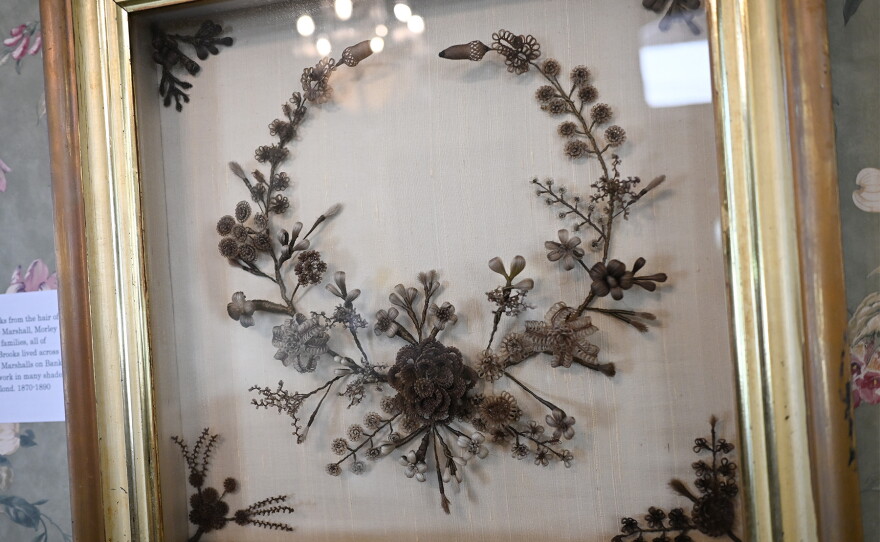

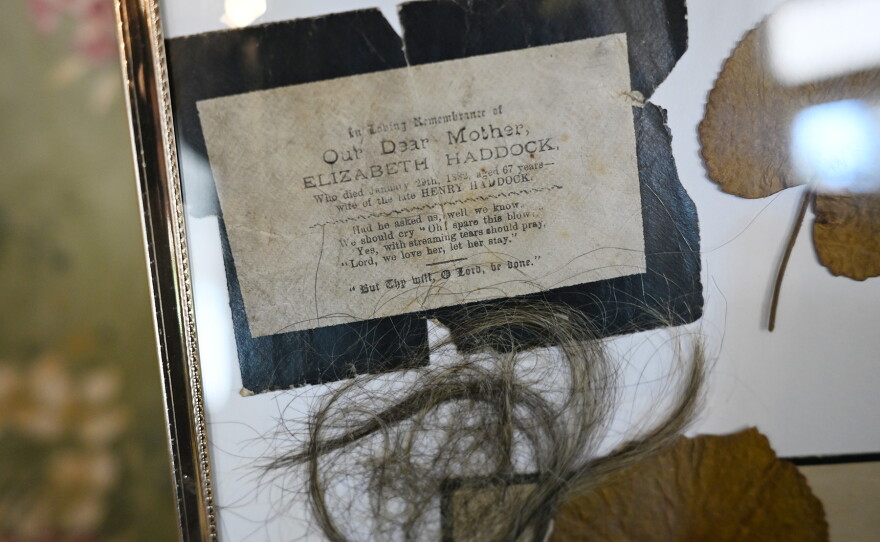


Keeping a lock of hair from a loved one who passed was popularized by Queen Victoria following the death of her beloved husband in 1861, as was dressing in black.
As photography came about, some people would take post-mortem photos of their loved ones as a keepsake, Spencer said, but the technology was expensive.
“If they couldn't afford that, the hair art was an easy and inexpensive way to memorialize their loved ones so they weren't forgotten,” she said.
Saving flowers from funerals also became popular, though in earlier centuries, flowers served a more practical purpose.
“That started because when they would lay out the bodies in your parlor, they would smell bad because they were decaying,” Spencer said. “So, everyone sent flowers to keep the home smelling fresh.”
Spencer said she’s saved a flower from the funerals of every grandparent she’s lost.
“It's not that much different than how we pass down objects from great-grandparents and all of those things,” she said. “They were still doing that a hundred years ago.”

Death of a president
Nearly 200 years ago, James A. Garfield was born in Moreland Hills, Ohio — known then as Orange Township — and later bought a small farm in Mentor. His former estate, once operated by the Lake County Historical Society, is now maintained by the National Park Service.
Garfield was shot by the assassin Charles Guiteau at a train station in 1881 and died two months later, 200 days after his inauguration as president. Following a funeral service in Washington, D.C., Garfield’s body returned home to Northeast Ohio where he was laid to rest at Lake View Cemetery.
The Lake County Historical Society has 16 boxes of papers and other items from Garfield’s life, Spencer said, including numerous photographs from family members.
“It’s newspaper clippings, original documents pertaining to land purchases, random receipts for a haircut,” she said.
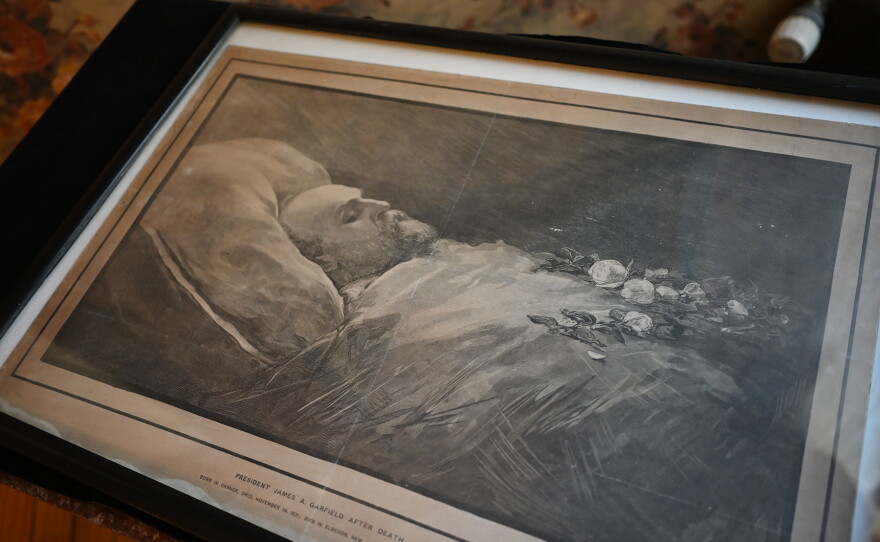


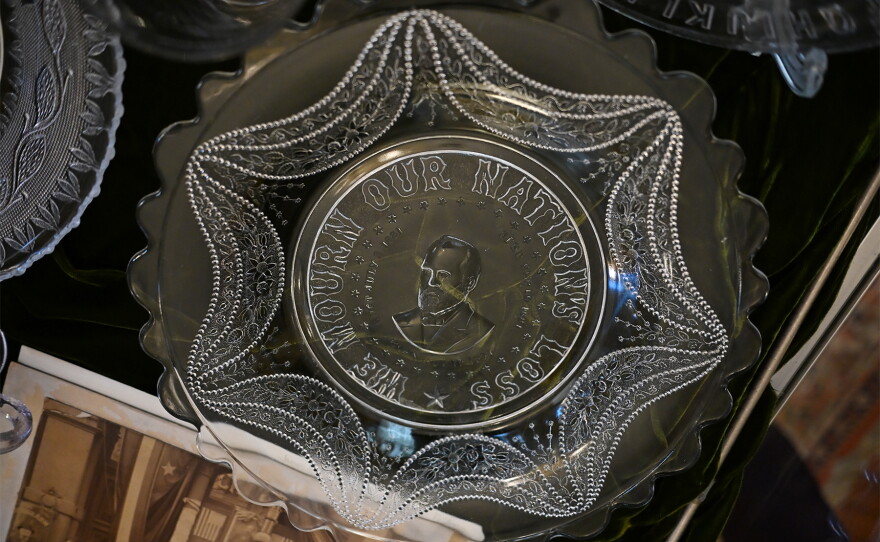
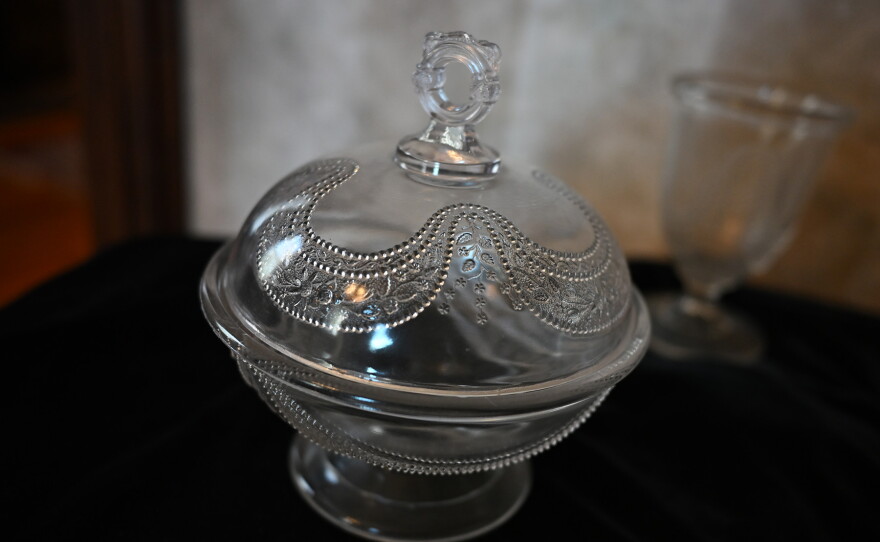
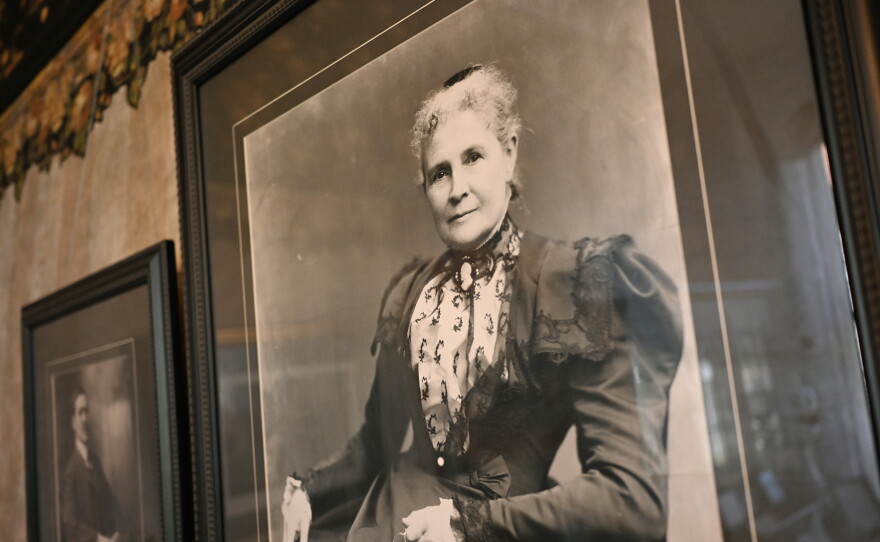
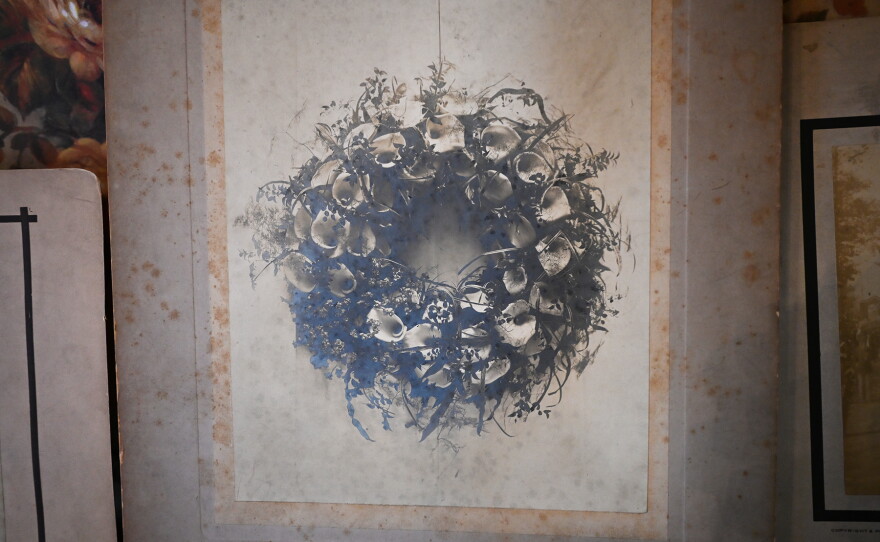
Among the items on display are several photographs of the funeral procession from Public Square to Lake View Cemetery, dried flowers from the funeral, a program from the 1890 dedication of the Garfield Monument at Lake View and several pieces of glassware commemorating the president’s death.
Plates, glasses and bowls were issued at that time with a circular bunting pattern, the pattern chosen by Garfield’s widow, Lucretia, as a symbol of her mourning, Spencer said.
“That thought of the bunting kind of took off, and everyone started producing pieces with the bunting as a nod to the death of the president,” she said.
Spencer said some of these items will remain on display beyond October.
She also arranges ghost hunts and cemetery tours throughout the year, along with haunted lantern tours. A few of those nighttime strolls through the historical society’s home are coming up on Oct. 29, Nov. 17 and Nov. 24.