


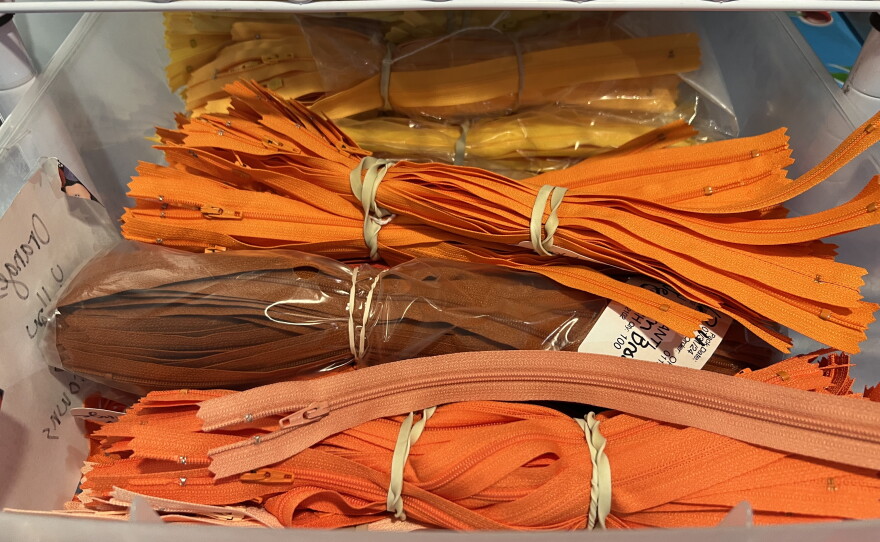
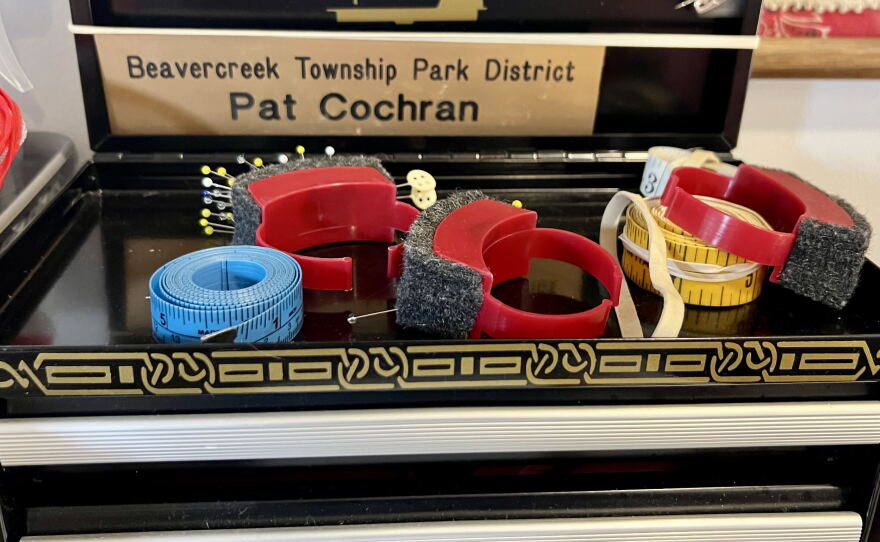
Every couple months or so, Beavercreek resident Pat Cochran’s brightly colored craft room turns into a classroom. She calls it her “zipper school.”
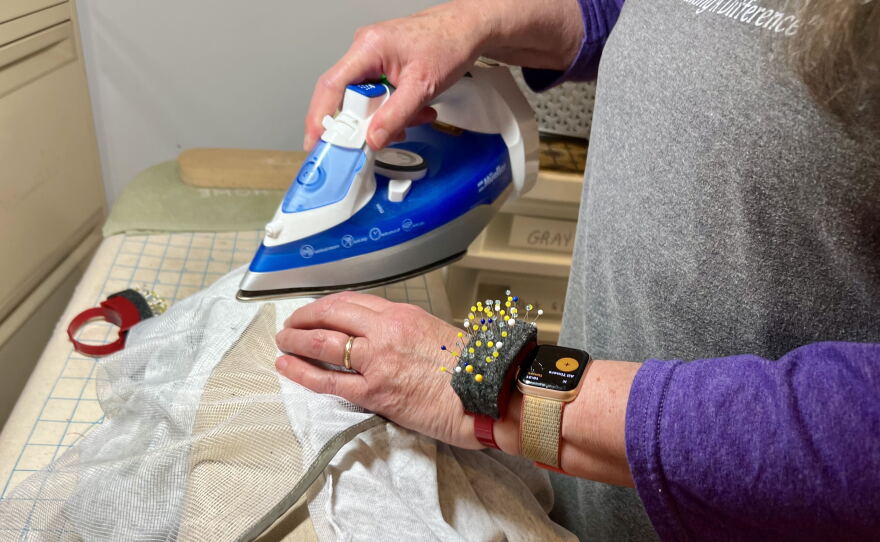
Instead of fastening zippers onto jackets or pants, Cochran demonstrates how to sew onto a shirt for someone undergoing chemotherapy.
“You're gonna sew that and iron that all the way around except for a bit at the top, okay?” she said as she handed a piece of fabric to a student on an August morning.
Chemotherapy is often a long and difficult process. Between all the treatments, side effects and uncertainty, even small tasks can feel like a huge undertaking.
Cochran and a group of Ohio seamstresses hope to bring a small comfort, by taking clothes and making them chemo-friendly.

The ‘Gang of Seamstresses’
Cochran was inspired by her friend, Dennis Seger. Back in 2018, Seger described the challenge of having to change clothes to receive chemotherapy treatment. Nurses couldn’t access the treatment port under his collarbone when he had his typical T-shirts on.
“He did not want to put on a patient gown,” Cochran said of Seger. “You're cold anyway and you take off your clothes and then you have to put everything back on.”
It was a small indignity, but one Cochran knew, as a studied seamstress, she could fix.

She made him three T-shirts with a zipper across the chest that allowed nurses to access his port more easily. Seger wore them to every chemo appointment.
“He came back and he said, ‘The nurses want to know if you'll make us some more,’” Cochran said.
So, Cochran enlisted some of her friends to help meet the demand.
Almost a decade later, the group is taking around 7,000 new shirts a year, adding a zipper and donating them to cancer treatment centers across the state.
They call themselves the “Gang of Seamstresses.”
“Gangstresses,” Cochran said with a smile. “That's what I call them, the gangstresses.”
A chain of generosity
Patty Luther travelled the hour from Marysville to Beavercreek on a recent Tuesday morning, in hopes of joining the gang.
Cochran inspected her zipper work carefully and advised Luther to add some soft swimsuit fabric at the bottom of the zipper.
“A lot of patients have sensitivities,” Cochran said. “So we try to make it as comfortable as we can.”

Luther will take what she learns back to her church and start her own chapter.
That’s how the group has grown over the years. Cochran teaches the technique; that person teaches another. Today, more than 50 seamstresses are sewing zippers across Auglaize, Mercer, Darke, Greene and Miami counties.
There’s even a Snowbird chapter that operates out of Florida each winter. Those gangstresses have passed along the pattern to women who have brought it back to Wisconsin and Indiana, which now have their own small chapters.
“Everybody knows somebody that's had cancer or has cancer, and they wanna help that person,” Cochran said.
A small source of joy
This network of volunteers works together to deliver the T-shirts to cancer treatment centers, where nurses hand them out to patients.
The seamstresses rarely meet the people they’re helping, but they leave a card with their name. It’s a reminder to the patient that someone is rooting for them.
“Some patients will say they can't believe that somebody that doesn't even know them did this for them,” Cochran said. “For us, it's no big deal. It’s 15 minutes.”
The small act of kindness meant a lot to Sheila Sennet’s husband, Dan Sennet.
“There's not a lot of joy to be had in infusion centers,” Sheila Sennet said. “But that shirt sure made Dan's day.”
Dan Sennet died from cancer in 2023. But Sheila Sennet said she hasn’t forgotten how the simple blue shirt made him smile, at a time when smiles were hard to come by.
“Oh, and you better believe me when I tell you that shirt needed to be cleaned and ready to go for the next time he had chemo. He just wore that shirt out, literally,” she said.
Seger’s legacy
The same was true for Dennis Seger – Cochran’s friend who inspired the gang’s start. Cochran said Seger was the shirts’ greatest champion.

A photo of him grinning in a zippered graphic tee sits near the sewing machine that Cochran works at. She still remembers the first shirts she gave to him: a Christmas shirt with two gingerbread men kung fu fighting, a community blood center shirt.
“His favorite was the Hulk shirt,” she said. “It said, ‘I'd flex, but I like this shirt.’”
Seger died in 2019, but Cochran said she can still feel his presence through this work.
“Maybe we're running low on shirts of a certain size or something, and within a few days or a week, shirts show up,” she said, shrugging. “That's all I'm going to say.”
